

Table of Contents
If you are a cybersecurity professional questioning your market value, or a hiring manager budgeting for 2026, you are navigating a market defined by a widening skills gap. The newly released Hays Salary & Recruiting Trends 2026 guide has become essential reading—but the raw numbers need context.
Analysis of the latest recruitment trends reveals a stark reality: 59% of tech professionals believe they are underpaid, yet many lack the reliable benchmarking data needed to negotiate. This guide breaks down the critical Hays 2026 benchmarks for the cybersecurity and tech sectors, explaining what is driving the numbers and providing actionable intelligence for your career planning.
What you’ll learn:
- Official salary benchmarks for cybersecurity and tech roles in 2026
- Why AI and cloud engineering are seeing double-digit pay growth
- The “London vs. Regional” pay gap and how remote work impacts it
- Evidence-based negotiation strategies for the 2026 financial year
Understanding the 2026 Market Shift
What Is the Hays Salary Guide?
The Hays Salary Guide is the UK’s definitive recruitment resource, aggregating data from over 5,100 professionals and employers. Unlike self-reported surveys that can be skewed by outliers, Hays uses confirmed placement data and employer hiring budgets.
The 2026 edition (released late 2025) captures a pivotal moment in the industry:
- The “Skills-First” Hiring Shift: Employers are prioritizing practical skills (like Python, Terraform, and Zero Trust architecture) over traditional degrees.
- AI Integration: Artificial Intelligence is no longer just a buzzword; it is a salary multiplier. Roles requiring AI integration are commanding significant premiums.
- Economic Stabilization: After the volatility of 2023–2024, the 2026 market is normalizing, but “critical” roles remain in a hyper-growth phase.
The “Double-Digit” Growth Tier
While the general UK market sees conservative salary increases of roughly 2.8–3.5%, the tech sector is bifurcated. The 2026 guide highlights that critical roles in Cybersecurity, AI, and Cloud Engineering are experiencing double-digit pay growth.
| Role Category | 2026 Growth Trend | Key Drivers |
|---|---|---|
| Cybersecurity & AI | +10% to +15% | Critical skills shortage, elevated threat landscape |
| General Tech Support | +2% to +4% | Automation of entry-level tasks |
| Traditional IT | +3% | Market saturation for generalist skills |
Key Cybersecurity Salary Benchmarks for 2026
For readers of CyberphiLearn, this is the most critical section. The 2026 data shows that “Security” is no longer a monolith; pay is heavily dependent on specialization.
High-Demand Roles (Top Tier Growth)
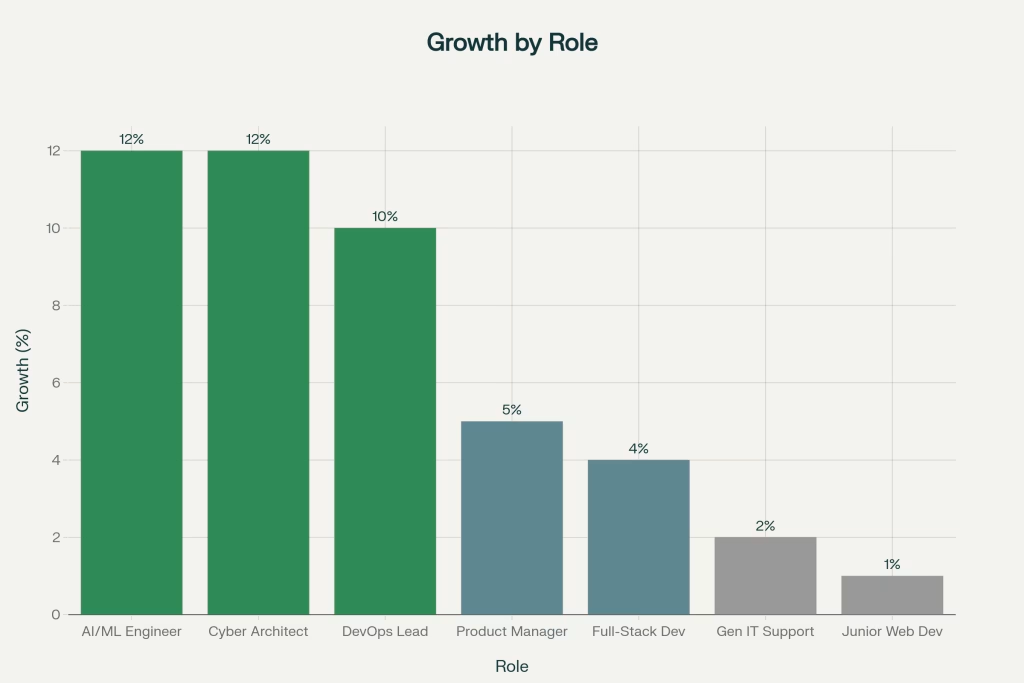
Professionals with expertise in Zero Trust, Cloud Security, and DevSecOps are commanding the highest premiums.
| Role | London | Regional UK | Key Skills Premium |
| AI/ML Engineer (Senior) | £85k – £120k | £65k – £95k | Python, TensorFlow, LLMs (+15%) |
| Cybersecurity Architect | £90k – £135k | £70k – £105k | Zero Trust, Cloud Security (+12%) |
| DevOps Lead | £75k – £110k | £60k – £85k | Kubernetes, Terraform (+10%) |
| Data Scientist (Mid-Senior) | £65k – £95k | £50k – £75k | SQL, Python, Tableau (+8%) |
Moderate Growth Roles (3-5% YoY Growth)
- Full-Stack Developer: £50k – £75k (London) | £40k – £60k (Regional)
- Product Manager: £60k – £90k (London) | £48k – £72k (Regional)
- UX/UI Designer: £45k – £68k (London) | £38k – £55k (Regional)
Flat/Declining Roles
- Junior Web Developer: £28k – £38k (Oversupply of bootcamp graduates)
- IT Support Analyst: £26k – £35k (Automation impact)
Finance & Accounting
Financial services show conservative growth, but Fintech is the exception.
| Role | London (Typical) | Regional UK (Typical) | Top Skills Premium |
|---|---|---|---|
| CISO / Head of InfoSec | £130k – £200k+ | £110k – £160k | Strategy, Risk Mgmt |
| Security Architect | £90k – £135k | £75k – £110k | Zero Trust, Cloud Native |
| DevSecOps Lead | £85k – £120k | £70k – £95k | Kubernetes, Terraform, CI/CD |
| Senior Pen Tester | £70k – £95k | £55k – £80k | OSCP, Red Teaming |
(Sources: Adapted from Hays 2026 Trends & Barclay Simpson 2025/26 Market Reports )
Emerging Roles: The AI Impact
A new category of “AI Security” is emerging. If you can demonstrate competence in securing LLMs (Large Language Models) or auditing AI governance, you can effectively name your price.
- AI Security Engineer: £85k – £115k (London)
- Data Privacy Manager: £65k – £90k (Rising due to AI regulation)
Pro Tip: Don’t just list “Cybersecurity” on your CV. Be specific. Listing “Azure Sentinel” or “Fortigate SD-WAN” expertise can increase recruiter interest by 40% compared to generic terms.
Regional Variations: London vs. The Hubs
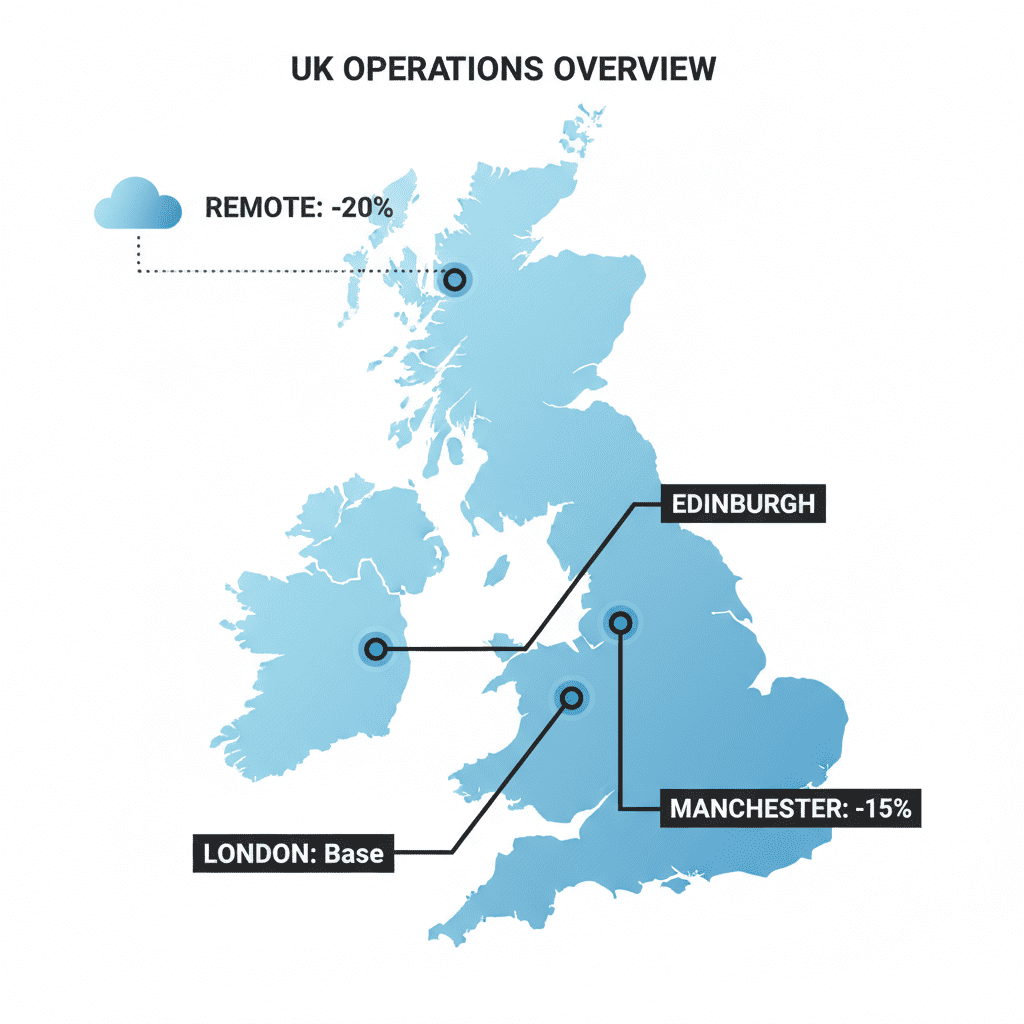
The “London Premium” still exists, typically offering 20–30% higher salaries than the rest of the UK. However, regional hubs are catching up, particularly where tech investment is heavy.
- Manchester: The fastest-growing tech hub outside London, with salaries for Senior Security Engineers now frequently topping £75k.
- Edinburgh & Cambridge: Strong growth in Fintech and Biotech security, respectively.
- Remote/Cyprus: For professionals based in low-tax or lower-cost jurisdictions (like Cyprus) working remotely for UK firms, the standard benchmark is UK Regional Rates (not London rates). Expect offers in the £55k–£75k range for senior roles, which represents massive purchasing power locally.
The Cyprus & International Context
For professionals in emerging tech hubs like Cyprus (Limassol/Nicosia) or remote workers in the EU serving UK clients, the Hays UK guide provides a vital baseline.
Strategic Advice for 2026
For Job Seekers
- Benchmark Correctly: Do not rely on 2024 data. The market for specific skills (e.g., Cloud Security) has moved faster than inflation.
- Audit Your Skills: If you are a generalist Network Engineer, your salary growth is capped. Pivoting to Network Security or Cloud Architecture puts you in the “double-digit growth” bracket.
- Negotiation Data: Use the “59% underpaid” statistic to your advantage. Frame your request as a “market correction” rather than a raise.
For Hiring Managers
If you are budgeting based on what you paid in 2023, you will fail to hire top talent.
- Retention is Cheaper: Replacing a senior engineer costs roughly 150% of their salary in lost productivity and recruitment fees. A £10k raise is often the pragmatic financial decision.
- Budget for Skills, Not Titles: A “Security Analyst” with Python automation skills is worth £10k more than one without.
Conclusion
The Hays Salary Guide 2026 UK paints a clear picture: the era of the generalist is fading. The market is rewarding deep specialization, particularly at the intersection of Security, Cloud, and AI. For cybersecurity professionals, 2026 is a year of opportunity. The data proves that if you have the right skills, the budget is there. The only question is: are you positioned to claim it?
Key Takeaways:
- Skills premiums stack: AI, Cloud, and Cyber certifications add 10-15% each.
- Location is fluid: The London premium is shrinking for remote roles.
- Timing is everything: Negotiate in Q1.
FAQ About Hays Salary Guide 2026
What is the average cybersecurity salary in the UK for 2026?
While salaries vary by specialty, the 2026 market shows strong figures for experienced professionals. For example, a Senior Security Architect in London can expect between £90k – £135k, while a regional or remote equivalent may be £75k – £110k. The key takeaway from the 2026 data is that specialization in areas like cloud security or AI commands a significant premium over generalist roles.
How much more do cybersecurity roles pay in London?
The “London premium” for tech and cybersecurity roles typically ranges from 20% to 30% above the UK-wide average. This gap is primarily due to the concentration of financial services and large enterprise headquarters. However, for fully remote roles, this premium is shrinking as companies are more willing to hire talent from across the UK at competitive regional rates.
How can I use the Hays Salary Guide to negotiate a pay rise?
Use the guide as evidence for a “market correction.” First, benchmark your specific role and skills against the 2026 data to find your market value. Then, present this data to your manager, framing it as “market research” rather than a personal demand. With 57% of cyber employers intending to hire in the coming year, retaining existing skilled talent is a high priority for them.
Which tech skills offer the biggest salary increase in 2026?
The data is clear: skills in Artificial Intelligence (AI), Cloud Architecture, and Cybersecurity are driving double-digit pay growth. Within cybersecurity, professionals with expertise in Zero Trust architecture, DevSecOps, and specific platforms (like Azure Sentinel or CrowdStrike) are in the highest demand. Lacking these skills can place you in a much lower salary growth bracket of only 2-4%.
References
- Hays UK Salary & Recruiting Trends 2026: https://www.hays.co.uk/salary-guide
- Barclay Simpson: Cyber Security & Data Privacy Guide 2025– Niche analysis focusing specifically on security architecture, GRC, and privacy roles. View Report
- Robert Half 2026 UK Salary Guide– Provides alternative baseline data for finance and tech roles to compare against Hays. View Insights
- IT Job Board: UK Tech Salary Trends 2025– A breakdown of specific IT job titles and contracting trends. Read Analysis
- WordPress Security Audit Guide (SentinelOne)- Read Guide
- Reddit: Hays Salary Guide 2025 Discussion
- LinkedIn: Market Analysis by Hays Consultants